AI that works in your business processes
We put AI use cases into production in business processes, with agents, rules and human responsibility.
Give your team more time for its core work
Reading enquiries, finding information and preparing quotes takes repeated effort, even when each case is slightly different. We use AI where it can take specific steps off your team's hands while keeping results open to expert review.
AI Use Case Analysis: find out where AI really creates value
The AI Use Case Analysis is a compact assessment of your ideas, processes and available data that gives you a clear basis for decisions, beyond general advice.
Where would AI be worthwhile for us, and what should we implement first?
From AI ideas to a prioritised implementation roadmap.
Paths to a digital future. With support from esveo
After the initial assessment, the next step is either automating your operational processes or adding AI features to your digital product. Both share rules, operations and responsibility.
AI Workflows & Agents
„How do we put AI to productive use in our operational processes?“
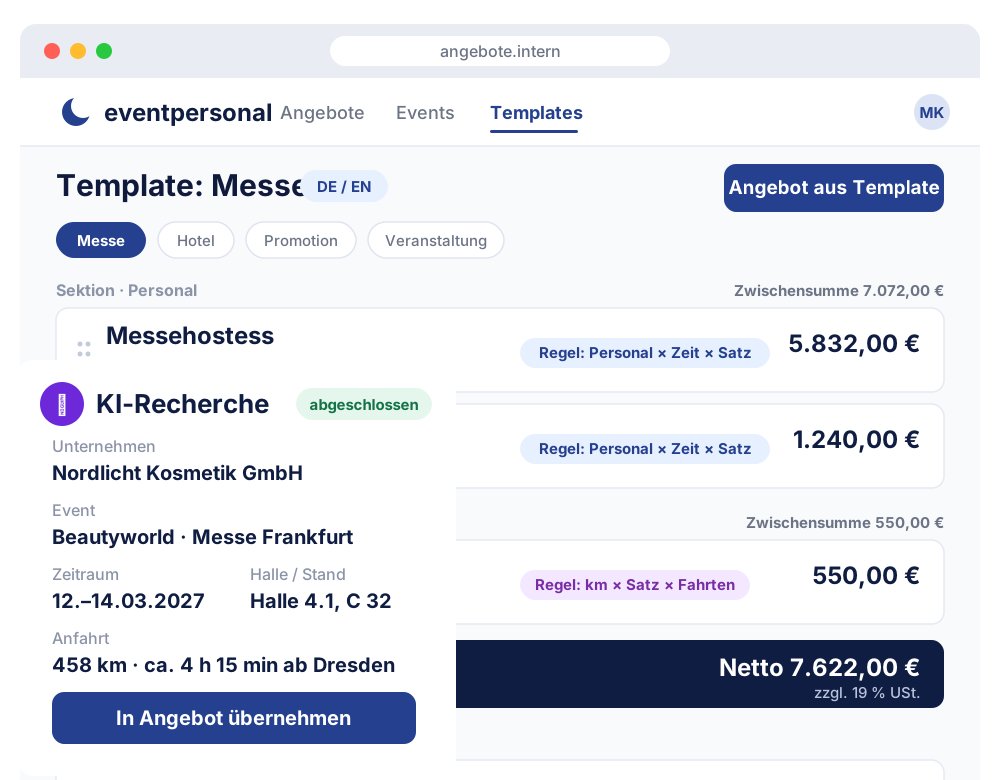
Production AI automation for operational business processes.
AI Components for Digital Products
„How can AI become a useful feature in our digital product?“
AI features that improve your digital product.



Do these challenges sound familiar?
„Where would AI be worthwhile for us, and what should we implement first?“
„What can AI do today, and what does that mean for our ability to act?“
„Can we quickly turn this AI use case into something we can test?“
„How do we put AI to productive use in our operational processes?“
„How can AI become a useful feature in our digital product?“
Find out what fits in 30 minutes
Arrange a conversationFrequently asked questions
Do we need an AI strategy first?
No. The AI Use Case Analysis and workshops establish this foundation. Ideas become an assessed portfolio, and the portfolio becomes a programme with roles and governance.
How does an agent differ from a chatbot?
A chatbot answers questions. An agent handles tasks: it reads incoming information, makes decisions within defined rules, works with your systems and hands over to people where it matters.
Does a person remain responsible?
Yes. We design this deliberately. Approval steps at the right points, clear rules, logging and traceability are part of every workflow from the start.
What if our data is not ready for AI yet?
That is often the real first step. We then establish the foundation in Digitalisation & systems: data, metrics and system access. The use-case roadmap remains the goal.
How do you handle data protection and regulation?
Risk and data protection considerations are an integral part of the AI Use Case Analysis; governance and responsibilities are part of the operating model. We do not recommend what cannot be used responsibly.
Which models and providers do you use?
We develop model-agnostic systems. The architecture separates the use case, rules and model so models remain interchangeable. The choice follows requirements such as quality, cost and data protection.
How quickly can a first pilot run?
The AI Agent Pilot takes a specific use case with a clear scope, sample data and a first agent or workflow into a working test quickly, providing a basis for deciding on implementation.
What happens after the pilot?
Successful pilots are prepared for production with system integration, approvals, logging and operations. The approach becomes a reusable template, making each subsequent use case less expensive.
Will automation replace our employees?
It takes over routine work while people retain responsibility. The aim is for specialists to spend less time on recurring tasks and for decisions to stay with those who have the experience and context.
Does esveo use AI itself?
Yes, every day. We use AI for analysis, prototyping, implementation and review, with people retaining responsibility. This experience feeds directly into our customers' use cases.